New Evidence: Assessing the impact of demand-building interventions on Trust
We're excited to share findings from our latest collaboration with partners in Pakistan and Kenya working on vaccine demand-building interventions.
Working with Impetus and CFAW in Pakistan, we measured trust before and after three interventions targeting different entry points in the immunization journey, from paracetamol provision to vaccinator training.
We also explored trust patterns among men enrolled in PATH's male sensitization program in Kenya (Chanjo Talks Kazini) post-intervention, drawing insights on its impact from qualitative research with program participants using a new conversational tool.
-
Offering paracetamol and informational materials to caregivers at vaccination sites was associated with a 1.7 percentage-point increase in total trust, driven by gains in trust in the vaccine's benefit and relevance. Interestingly, the effect differed by household income. Higher-income participants gained most trust, raising important questions about service quality expectations.
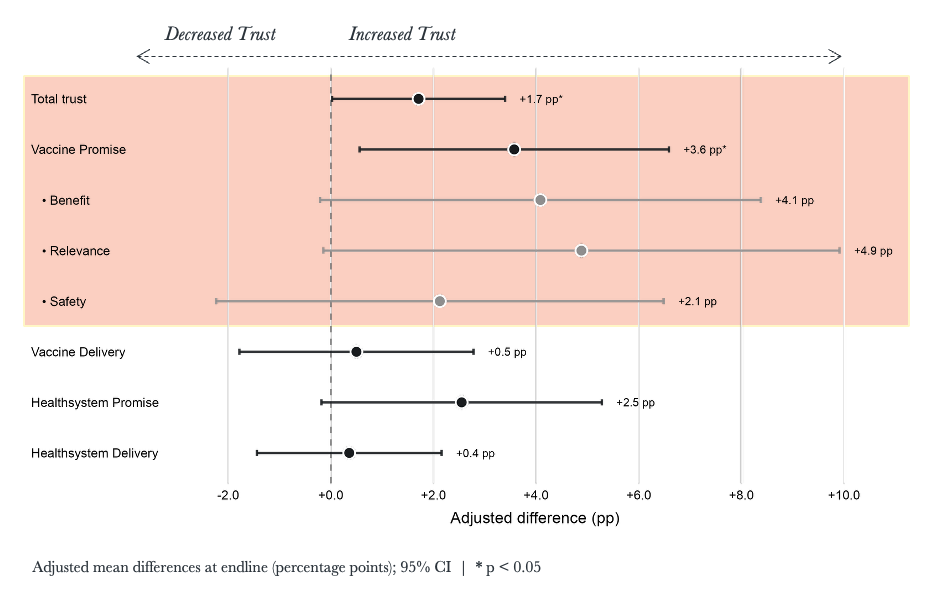
Caregiver's probability of being offered paracetamol was estimated using logistic regression with covariates: vaccination site type, Union Council, child age (weeks), vaccination card presence, baseline trust (four quadrants), caregiver education, household income, and caregiver gender. Inverse probability of treatment weighting (IPTW) was applied using stabilized weights; propensity scores were clipped at [0.01, 0.99] to avoid extreme weights, and final weights were Winsorized at the 99th percentile. Covariate balance post-weighting was verified using standardized mean differences (target: |SMD| < 0.10). For each trust outcome, we fitted weighted linear regression (endline trust ~ paracetamol offered + baseline trust + covariates) with heteroskedasticity-robust standard errors (HC1). Coefficients estimate the average treatment effect on the treated: the adjusted difference in endline trust for families offered vs. not offered paracetamol, conditional on observed covariates. IPTW is used to strengthen causal inference by creating balance between offered/not-offered groups.
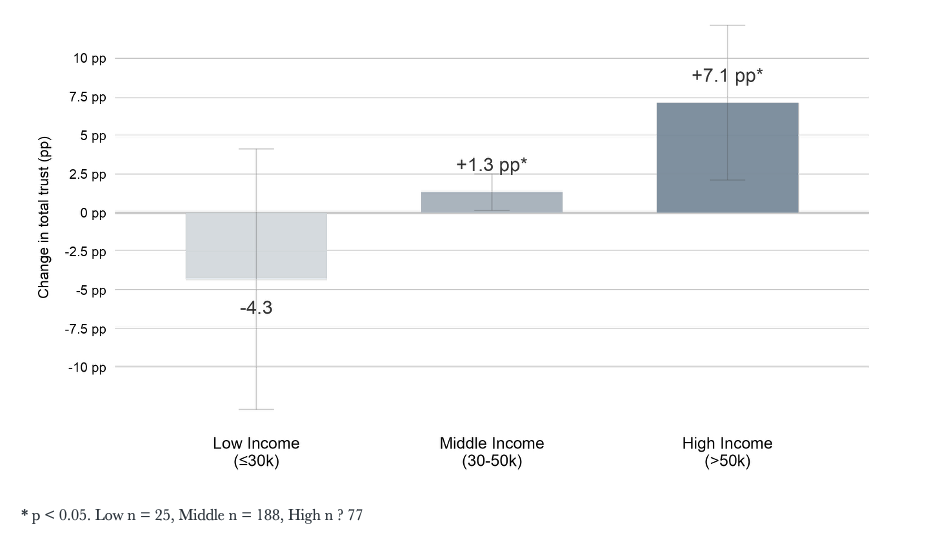
Heterogeneous intervention effect by income (low: ≤30k, middle: 30-50k, high: >50k PKR/month) were tested by adding paracetamol offered × income interactions to IPTW-weighted models, with low income as reference. Interaction p-values test for significant heterogeneity; stratified models (fitted separately per income level) confirmed findings. HC1-robust SEs. Low-income stratum (n=25) had limited precision. Only the effect of total trust is shown
These findings deepen a key pattern: beyond an association between trust and vaccination intent, we now see a strong link between trust and vaccine behavior.
Each 10 percentage-point increase in trust was associated with a 9% higher likelihood of vaccination
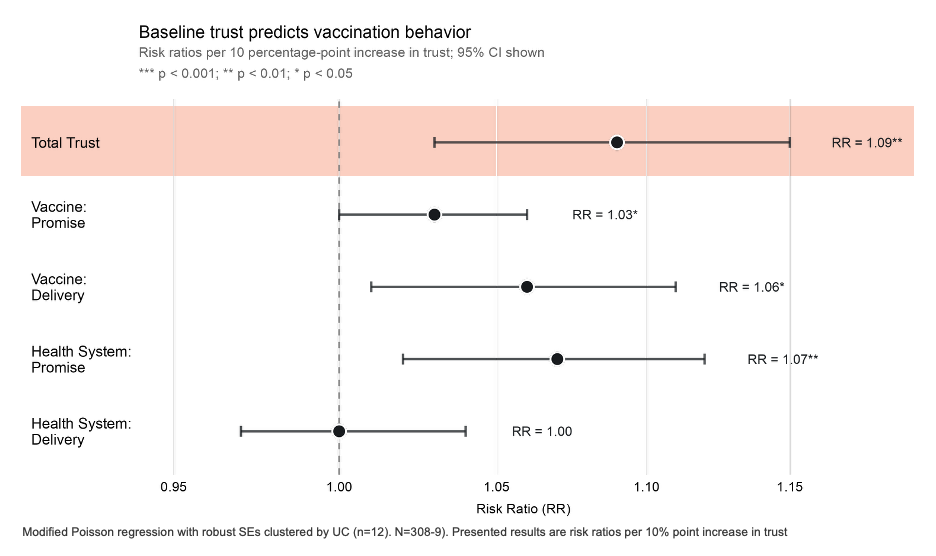
The association between baseline trust and vaccination uptake was assessed using modified Poisson regression with robust standard errors clustered by Union Council (n=12). Trust predictors were scaled per 10 percentage points; covariates included Union Council, demographics (caregiver age, gender, education, household income), child age, and card availability. Risk ratios (RRs) are reported; RR > 1 indicates higher likelihood of vaccination with higher baseline trust. Modified Poisson regression provides valid RRs for common binary outcomes and avoids the overestimation inherent in odds ratios from logistic regression.
-
Through the Mukhtari Project, vaccinators received arts-based wellbeing training and motivational interviewing techniques. Contact with untrained vaccinators led to approximately 4 percentage-point decrease in overall trust, while contact with trained vaccinators prevented trust erosion, particularly in vaccine promise and vaccine delivery dimensions.
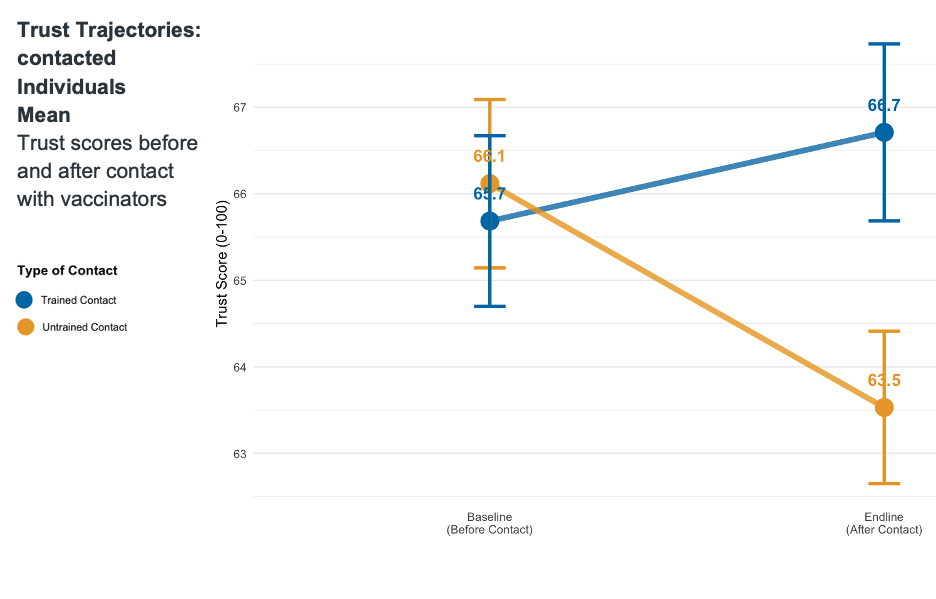
Graph shows the group means and SE for total trust at baseline and endline among contacted individuals, split by those contacted by a CFAW trained contact and those contacted by an untrained contact. MIXED EFFECT MODELS: Additionally, mixed-effects DiD estimate the causal effect of training on changes in trust using a two-period DiD model. Models controlled for baseline trust among other covariates (caregiver age, sex, etc.). To account for clustering linear mixed-effect models with a random intercept for vaccinator catchment areas were plotted, and p-values were obtained using lmerTest. MEDIATION: Among contacted individuals we tested if improvements in vaccinator-caregiver interaction quality mediated the training effect on trust. Single mediator linear models estimated the indirect effect and proportion of the total DiD effect explained, using endline mediator reports, treatment assignment and change in trust. Models included baseline trust and random intercept for vaccinator area.
-
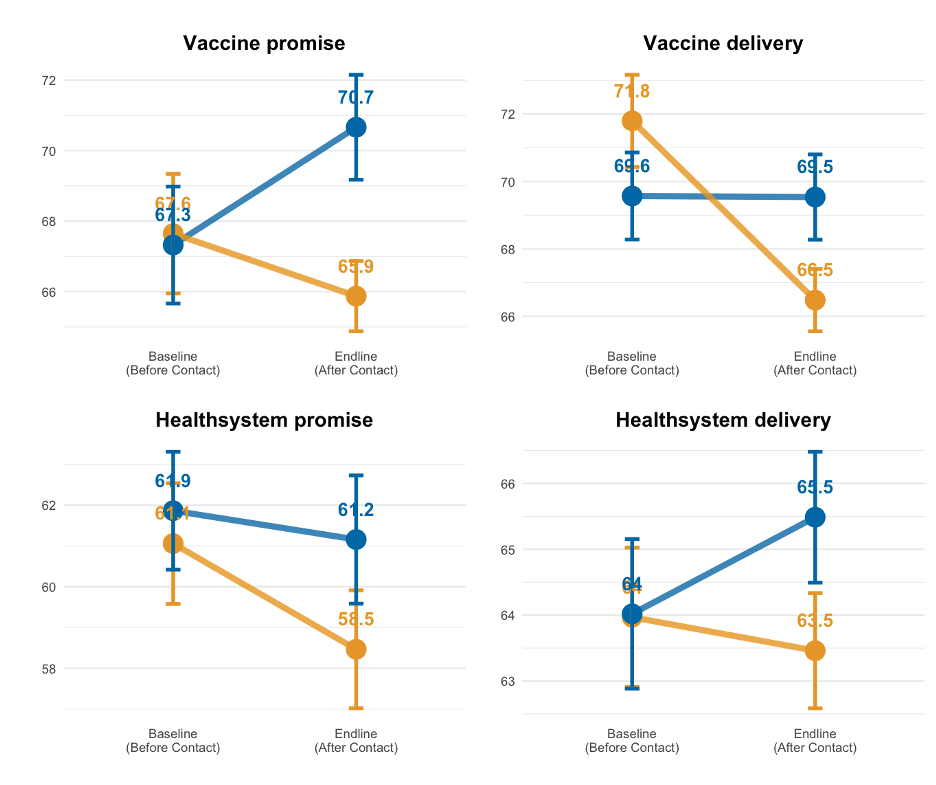
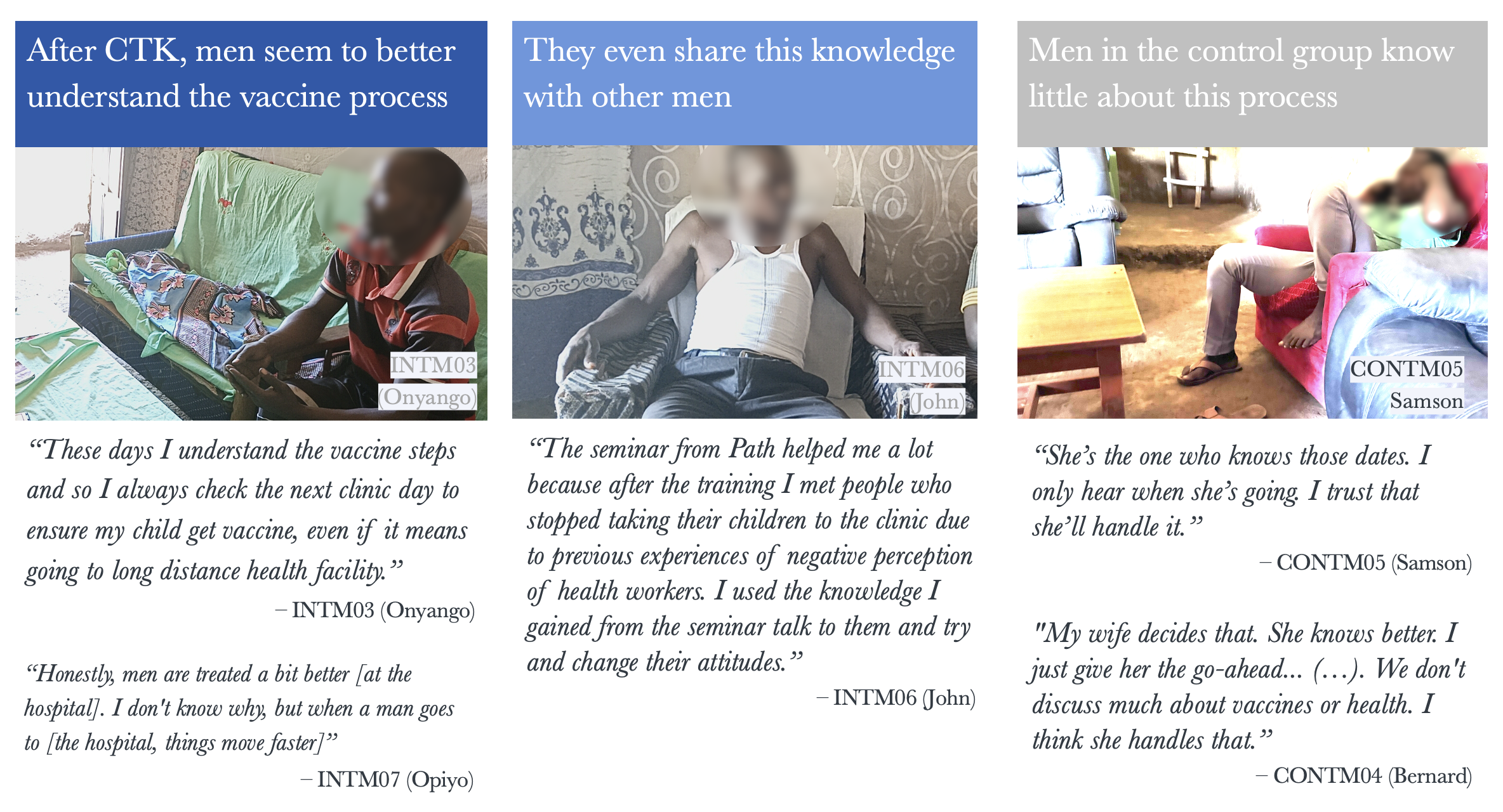
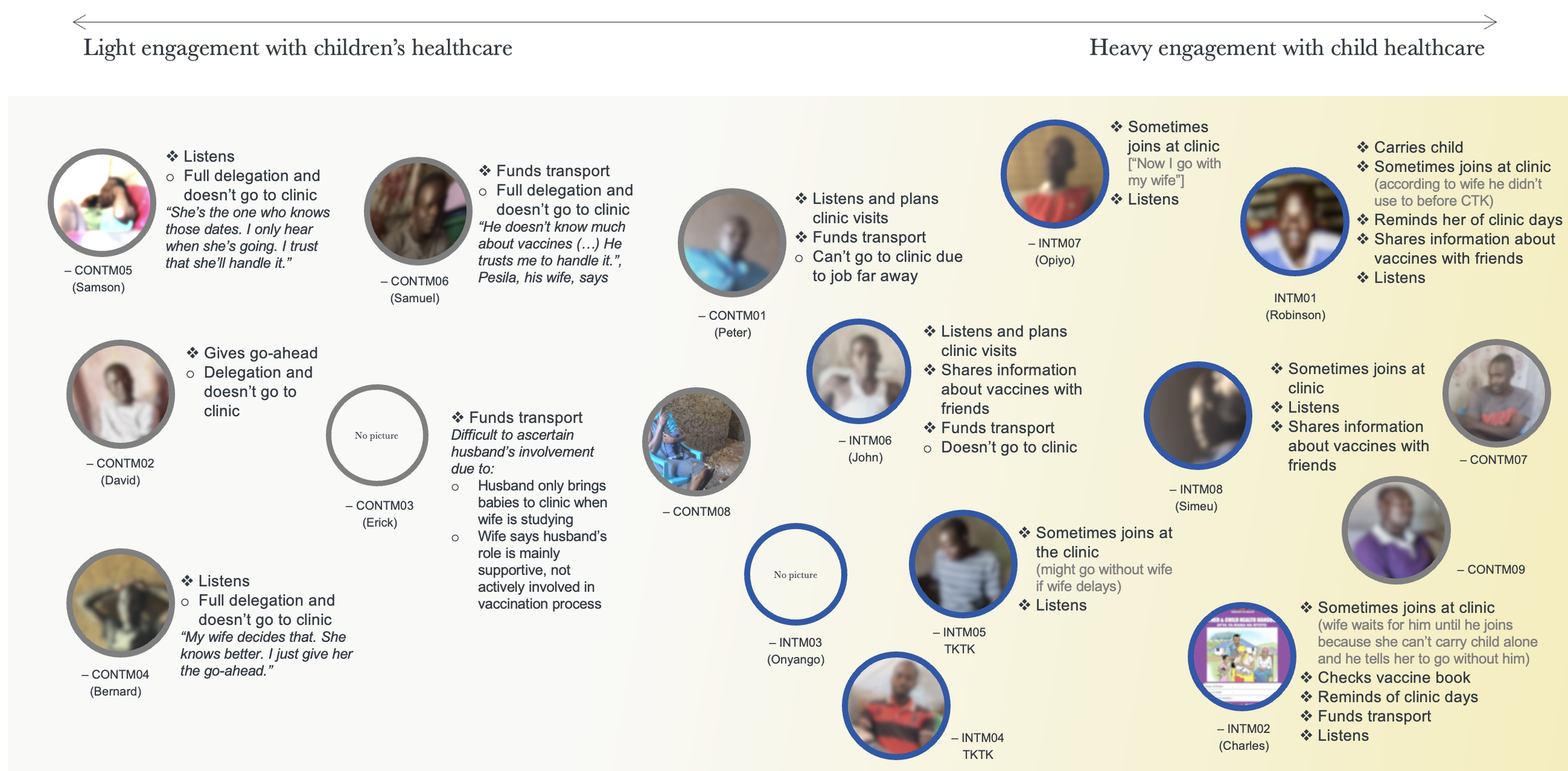
Men enrolled in PATH's CTK program showed higher trust in vaccine delivery compared to men who were not enrolled. Intervention group men demonstrated more knowledge about vaccination schedules, accompanied partners to clinics more often, and took more active roles in their children's healthcare than control group men.
A methodological note
Our experiences across these interventions highlight the need to go beyond simply adapting to field disruptions, be it flooding, concurrent vaccination campaigns, community research fatigue, or implementation tracking challenges. Moving forward, we must anticipate and integrate these realities as analytical considerations from the start – creating more effective feedback loops to better act on the downstream consequences of pragmatic in-field decisions and adaptations.
To conclude, these findings show that different interventions affect distinct dimensions of trust, and understanding these patterns helps us design more effective demand-building strategies. As we continue this work, we're working to deepen these finds, and improve both the quantitative and qualitative tools used as part of these experiments, with the goal to make trust measurement more accessible and actionable for partners worldwide.
